
Tjong A Fie
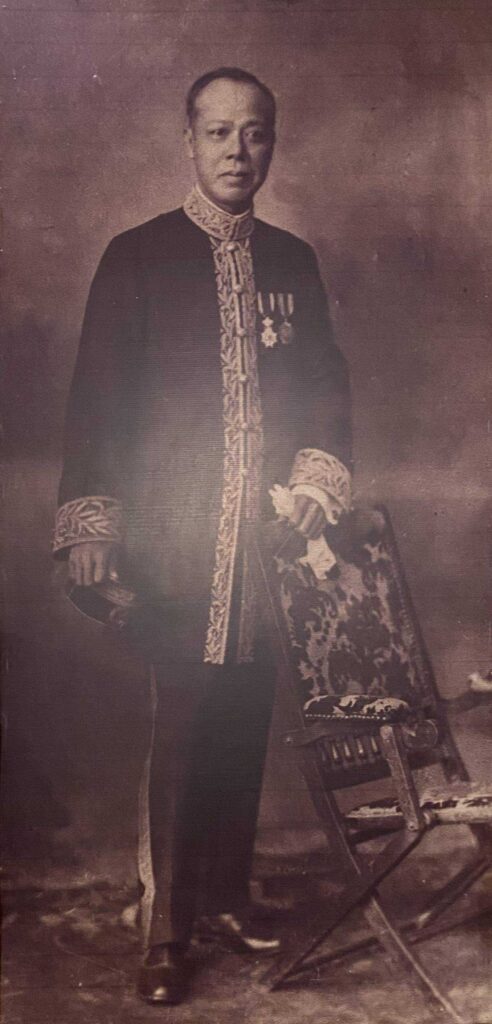
Tjong A Fie was one of the most influential figures in the history of Medan during the late 19th and early 20th centuries. From a young migrant from China, he rose to become a successful businessman and community leader who played a significant role in shaping the city’s economic, social, and cultural development.
He was born in 1860 in Meixian, Guangdong Province, China. Coming from a modest background, he did not complete his formal education and from a young age helped support his family’s business alongside his brother, Tjong Yong Hian. At around the age of 17–18, he followed his brother to Deli, where his journey and career began to develop rapidly.
His early years were marked by humble occupations, including working as a shop assistant and courier. Through perseverance, business acumen, and his ability to adapt to the local environment, he eventually became a successful entrepreneur. Together with Tjong Yong Hian, he built an extensive business network and established close relationships with the Dutch colonial authorities, the Sultanate of Deli, and business communities across Sumatra and beyond.
His success led him to prominent roles within society. He was appointed as a leader of the Chinese community and rose through the ranks, from Lieutenant to eventually becoming Captain of the Chinese (Majoor der Chineezen) in 1911, succeeding his brother. In this role, he served as a key intermediary between the Dutch colonial government, the Sultanate of Deli, and Medan’s multiethnic society.
Beyond leadership, Tjong A Fie was actively involved in business and finance. His ventures spanned various sectors, including real estate, plantations, banking, and infrastructure such as railway development. He was involved in establishing financial institutions such as Deli Bank and Batavia Bank, and also founded a remittance bureau to assist Chinese plantation workers in sending money back to their homeland.
His contributions extended beyond the economic sphere into social development. He supported the construction of places of worship, hospitals, bridges, and educational institutions, both in Medan and abroad.
On February 4, 1921, Tjong A Fie passed away suddenly, leaving a deep sense of loss among the people of Medan. His passing was marked by widespread public mourning, reflecting the respect and admiration he had earned as a leader and philanthropist. His legacy endures not only in physical landmarks, but also in the values of compassion, tolerance, and social harmony that continue to shape Medan today.